


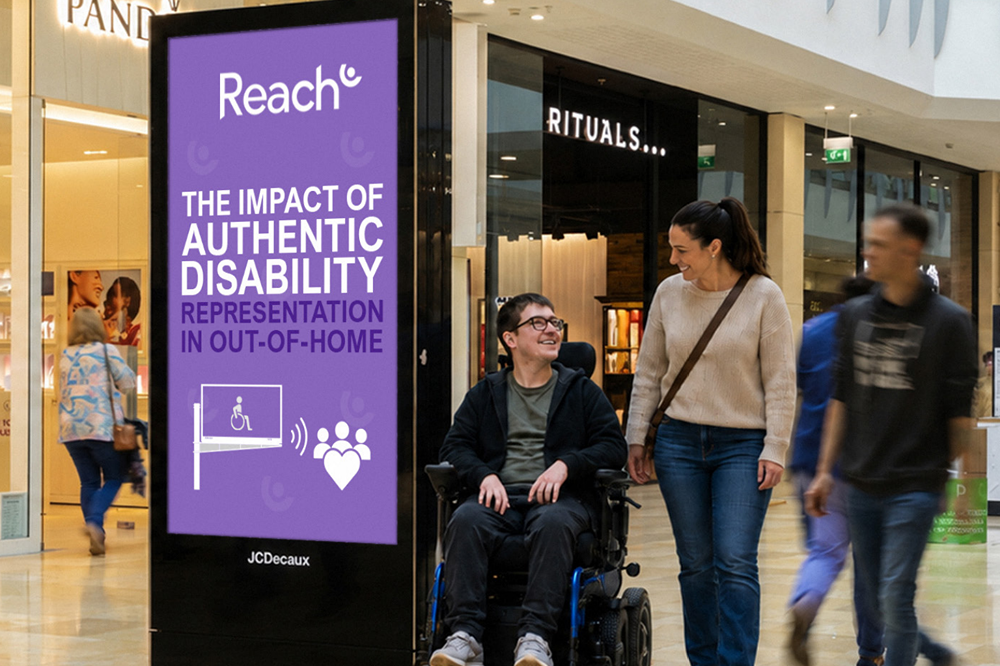
Disabled audiences are engaging with out-of-home (OOH) advertising, but brands are missing an opportunity to make them feel represented, according to new research from JCDecaux and The Diversity Standards Collective (DSC).
The report, Representation in the Real World, found that 81 per cent of disabled people see OOH advertising at least once a week, compared with 72 per cent of non-disabled audiences. Nearly half also pay close attention to the format.
However, disability remains under-represented in advertising, with just 0.06 per cent of adverts featuring disability, despite one in five people in the UK being disabled.
The research found that 80 per cent of disabled people rarely or never see themselves represented in OOH campaigns. Meanwhile, 91 per cent said they would be more likely to consider a brand if its advertising featured a disabled person or story.
The findings highlight that retailers face responsibility, but also a commercial opportunity. The report points to the £274bn Purple Pound, suggesting that more authentic representation could help brands build trust, strengthen emotional connections and increase consideration.
Related Story

Alongside representation, the accompanying best practice guide outlines 10 ways brands can make campaigns more inclusive. Recommendations include using high-contrast colours, clear fonts and larger text, avoiding flashing or fast-moving digital visuals, and positioning screens at accessible heights.
It also encourages brands to work with disabled creatives and cast disabled talent, rather than relying on tokenistic representation.
The guidance, informed by a survey of 200 disabled people and consultation with focus groups and specialist partners, also highlights the importance of considering intersectionality. Some 78 per cent said it mattered to see disability represented alongside other aspects of identity, including race, gender and age.
The report argues that inclusive advertising should extend beyond creative execution, with brands ensuring their products, services and customer experiences are accessible too.
For retailers, the message is clear: representation needs to reflect the customers they serve, both on screen and in the real world.
Source: JCDecaux and The Diversity Standards Collective, Feeling Seen on Screen, 2026.
Click here to sign up to Retail Gazette‘s free daily email newsletter


